


Alignment of machinery on ships
Easy-Laser has alignment systems for different types of marine propulsion systems, such as propeller shafts, pods and water jets. In addition to this we can offer solutions for a variety of other applications, such as straightness and flatness.
Complete but customized solutions
Our laser measurement systems for the marine industry support both newbuild projects and ongoing maintenance. A key advantage is the modular design, where components from different Easy-Laser systems can be combined to match specific measurement needs. This removes the need to invest in multiple complete systems.
For example, a shaft alignment system can be combined with laser transmitters for flatness measurement or driveline straightness. This approach is cost-effective and simplifies training, since technicians work with one common measurement platform across applications.
A propeller shaft driveline can include several components depending on vessel design – such as drive shaft, bearing supports, stern tube, gearbox, motor, and couplings. The goal is typically to align these components along a straight line, or according to a defined alignment curve, to ensure reliable operation.
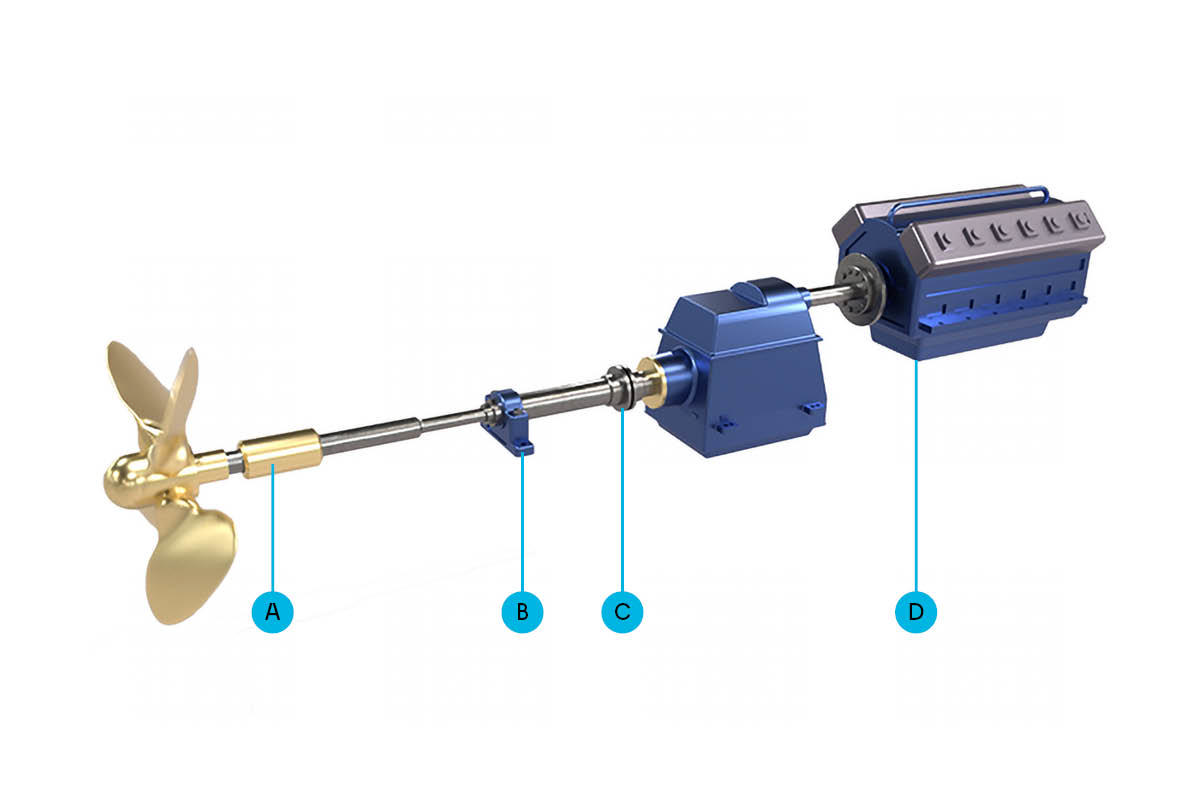
A. Alignment in relation to stern tube B. Measurement of bearing journals C. Shaft alignment D. Installation and checking of motors
A breakdown at sea can have enormous environmental and economic consequences.

Alignment of the propeller shaft and gearbox
Alignment of the propeller shaft and the main machine or gearbox is performed using shaft alignment equipment, with measuring units mounted on each side of the coupling. The units are attached using chain brackets around the shaft or coupling, or with strong magnetic bases. In some cases, one measuring unit can instead be mounted on the motor flywheel.
Easy-Laser measurement programs allow alignment with as little as 40° of shaft rotation. This is useful when the shaft is difficult to rotate, or when pipework or hull structures limit access.
The measurement results show how to shim and adjust the motor or gearbox laterally to achieve a straight driveline. Final positioning is carried out using live values during the adjustment process.
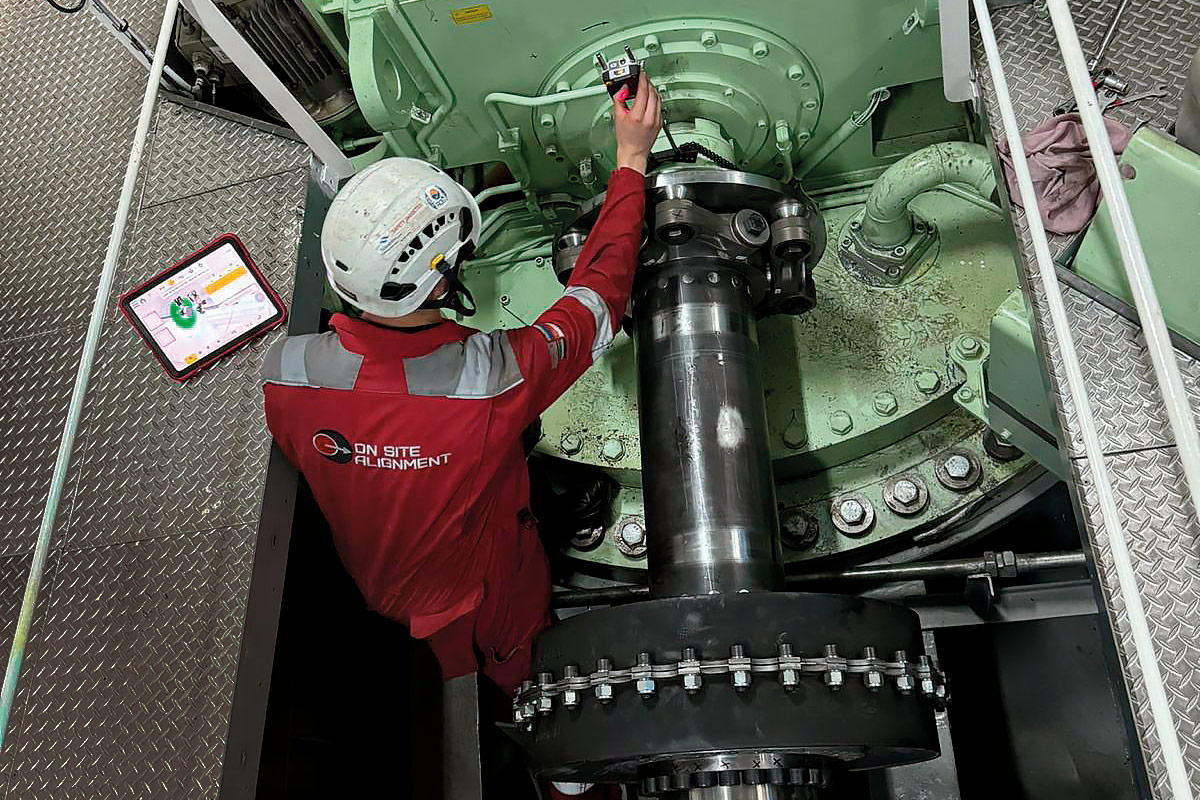
Shaft alignment with measuring units mounted on either side of the coupling.
Alignment of bearing journals in relation to stern tube
When the shaft is removed, a laser beam can be used to measure the stern tube and bearing journals along the centre line. This is what we call bore alignment. Since the measurement is performed at the centre of the bearing, it is suitable for both small and large shaft diameters.
The method is based on mounting a laser transmitter on the axial surface at one end of the stern tube (or on the gearbox flange or final support bearing). A detector unit is then placed in the bearing journal. The measurement program records the values and calculates the position in both vertical and horizontal directions, as well as first and second “slope” if necessary.
As adjustments are normally carried out on land or in dry dock, compensation values can be applied to reflect the bearing position when the vessel is afloat.
If needed, bearing roundness can also be checked. This is typically done using a bracket with a measurement probe.
Easy-Laser systems can also be used to measure bearing play. One measuring unit is mounted on the shaft and the other on a fixed machine part. The shaft is then lifted using suitable equipment, and any play is read directly from the system.

Checking bore alignment.
Installation and checking of motors
Motors must be mounted on a flat base, with parallel support surfaces for the feet. Flatness is best checked using a laser transmitter with sweep, e.g. Easy-Laser XT22, and flatness software. This applies to both electric motors and diesel engines.
For diesel engines, the straightness of the main and cam bearings is checked with the relevant shafts removed. This is done using a line bore measurement system. An indirect but useful check is to measure the straightness of the motor base, which can indicate incorrect setup or installation of the machine. Read more about checking and aligning diesel engines.
Belt-driven systems
On vessels such as car ferries, the drive system may include powerful sheaves or pulleys. Laser-based measurement systems are well suited for these applications, where accurate pulley alignment is required.
Ships may also include other belt-driven machines that must be aligned to reduce vibration, improve efficiency, and extend belt service life.
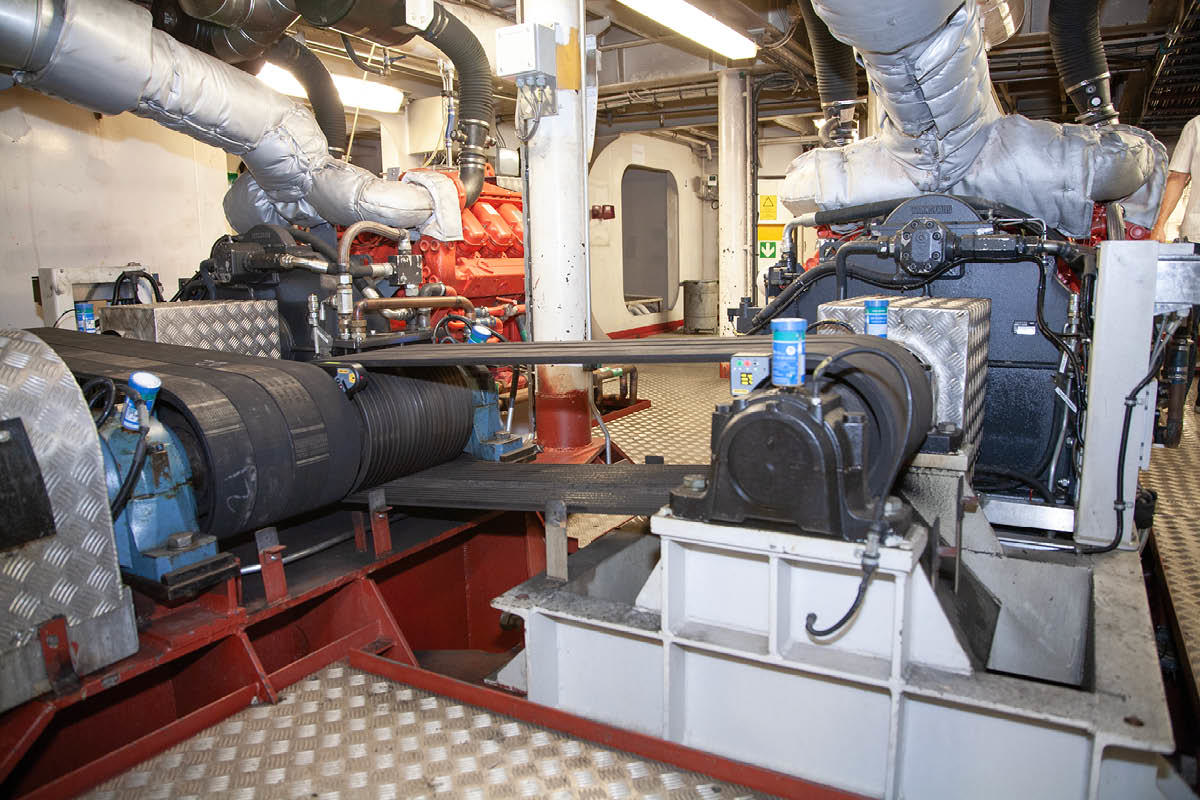
Belt assembly on a ferry. Two motors power one drive shaft, which in turn is connected to a 360° rotating propeller pod.
Customized solutions for less common alignment problems
Easy-Laser has extensive experience in measurement and alignment for shipyards. This includes solutions for single-bearing drivelines and customized setups for drivelines with cutless bearings, (water-lubricated rubber bearings).
Based on the applications you need to handle, a measurement system can be configured to match specific requirements. By combining components from, for example, bore alignment and shaft alignment systems, it is possible to create a highly cost-effective solution.
This flexibility makes Easy-Laser well suited for service companies and machine installers with a wide range of assignments.
Flatness measurement of slewing ring bearings
Freight-handling cranes are mounted on rotating bases with slewing ring bearings, either on land or permanently installed on vessels. For reliable crane operation, the bearing must be flat.
Flatness is checked using flange flatness software together with a sweeping laser transmitter and detector. The transmitter is mounted directly on the bearing using strong magnets. The detector is then placed at selected positions around the bearing to record measurement values. The software automatically calculates best-fit results for optimal adjustment, and zero points can be moved manually to minimize the required tooling work.
In some cases, the crane runs on rails that must be both parallel and level. Easy-Laser systems can also be used to verify and adjust these conditions.
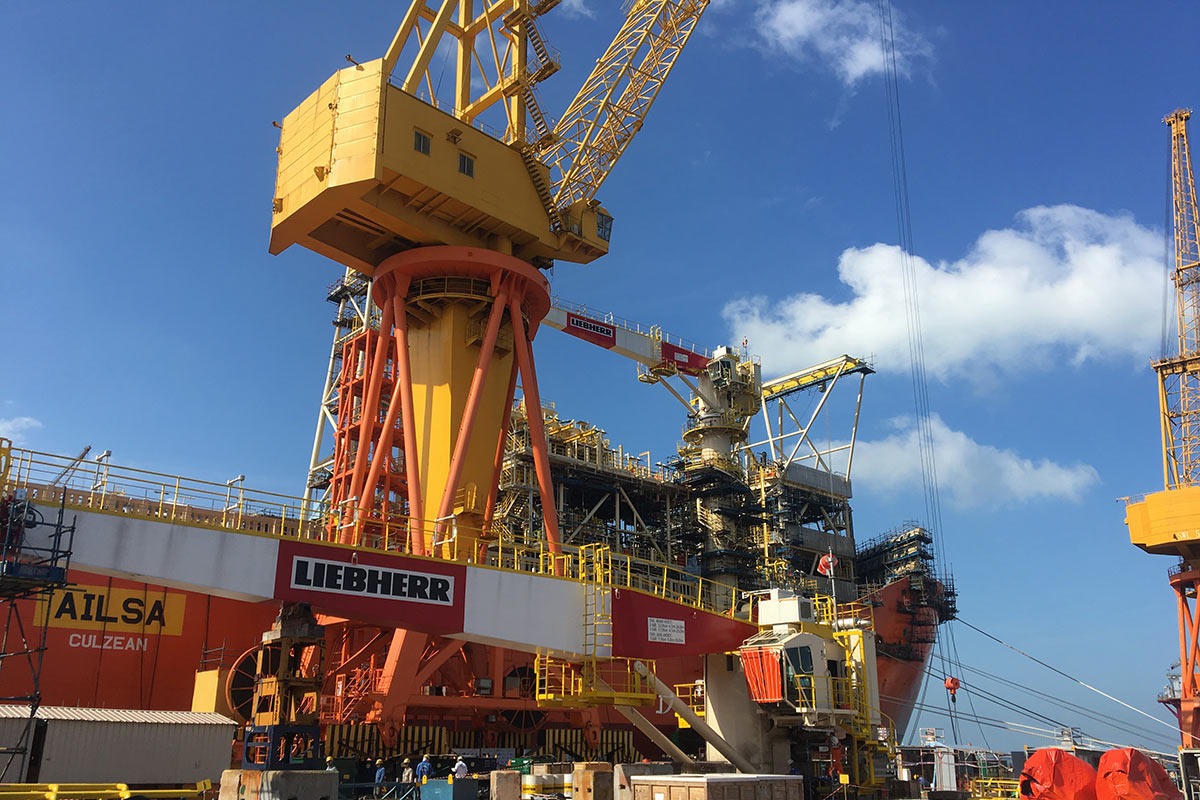
Crane slewing ring bearings need to be checked for flatness.
Other machinery aboard a ship that needs aligning
Rotating machinery in support systems – such as diesel engines, generators, bilge pumps, and crude oil pumps – is aligned using the same shaft alignment equipment as for drivelines.
The measurement system delivers consistent, high-accuracy results whether the vessel is alongside the quay, in dry dock, or at sea, where ship movements can affect working conditions.
Easy-Laser systems can also be used to check base flatness for components such as rudders, pumps, cable winches, and capstans.
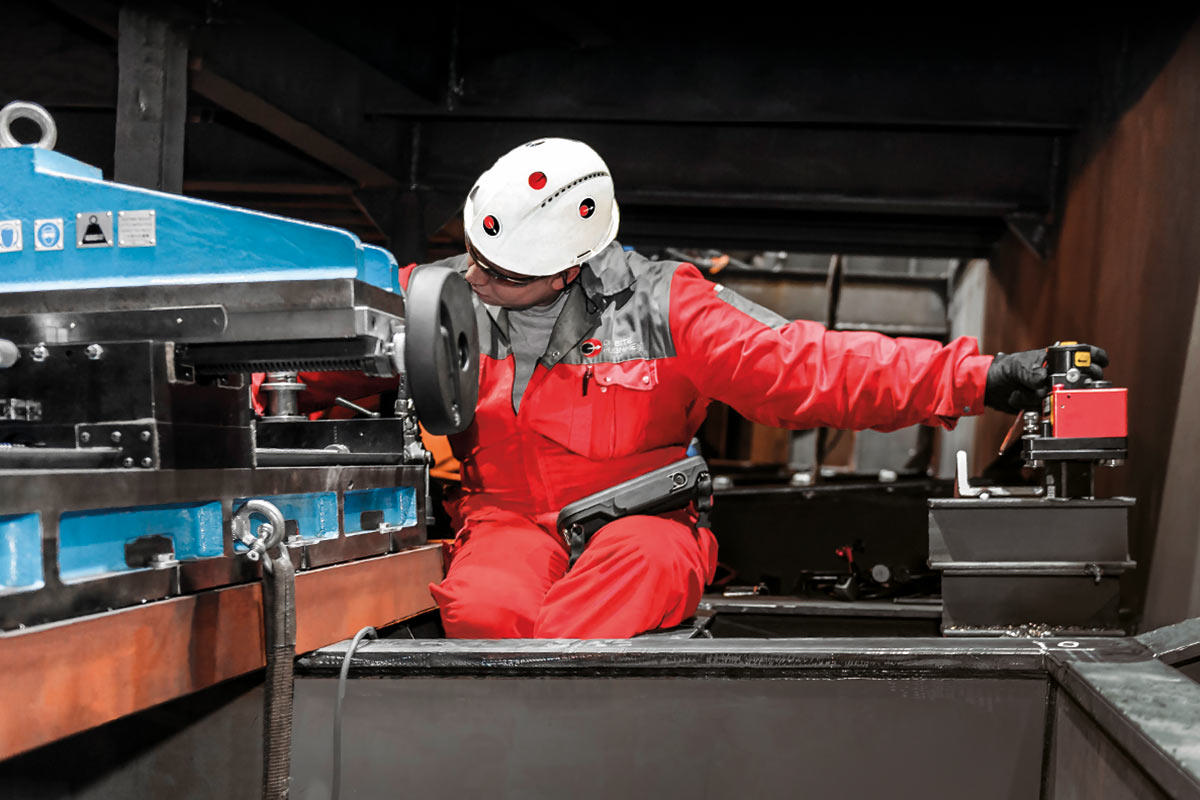
Checking machine foundation flatness.
Further application areas for ships and shipyards
- Rudder stocks can be aligned to the center line, to the correct angle.
- Centre line (bore alignment) for hinges for large hatch covers.
- Alignment of hull sections for extensions to ships.
- Pump systems and transporters for loading/unloading of bulk materials and liquids