


Alignment of turbines
Older, conventional methods for measuring turbines are often time-consuming and labor-intensive. With a laser measurement system, work can be performed much faster and with the greatest precision. The possibility of measurement results being easily and clearly documented is also a great advantage.
Many different types of turbines
Electricity is produced in several different ways, many of which rely on turbines to drive generators. These include gas, steam, water, solar, and wind power. Diesel-powered generators are also used, mainly as backup units and for balancing the power grid.
To meet the specific requirements within this application area, a combination of components from different measurement systems is often the most effective solution. Information about wind turbines is presented on a separate page – read more here.
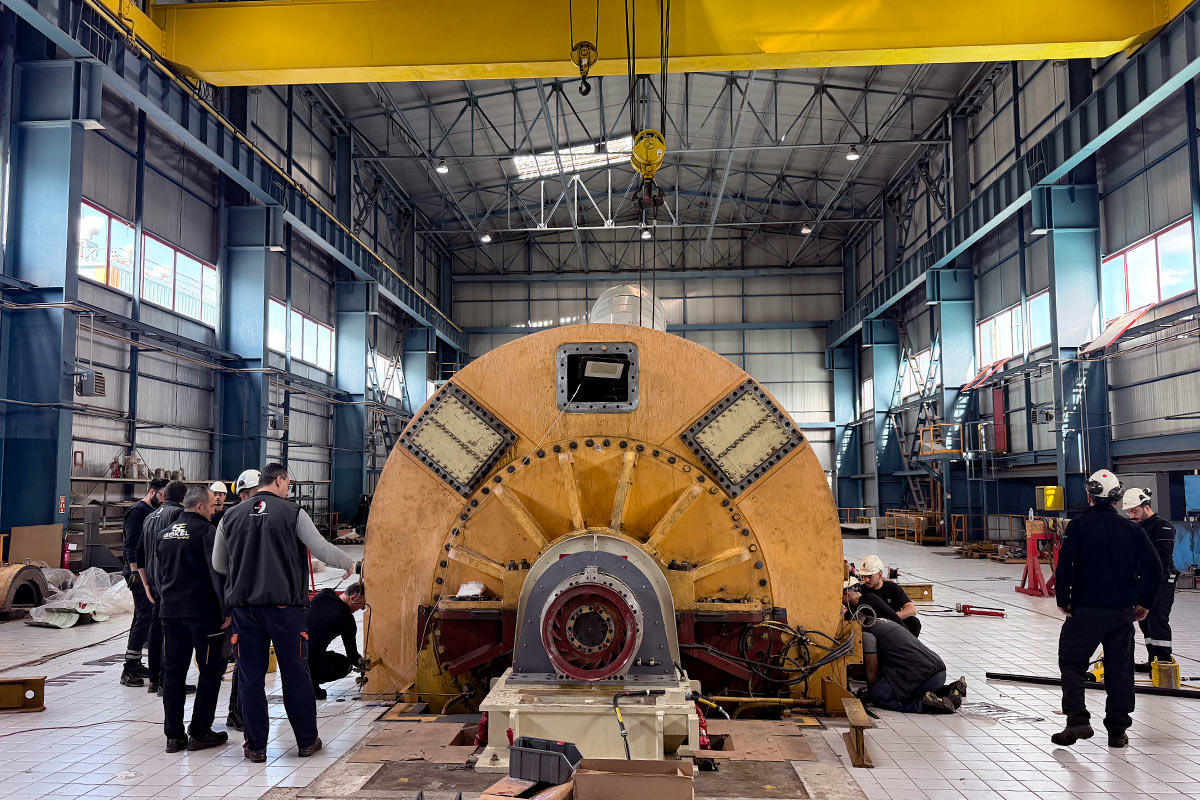
Faster and easier turbine measurements
Older methods for measuring and aligning turbines often involve heavy dummy shafts and/or wires, and dial gauges. These methods take time to set up and can be cumbersome to use. Laser measurement systems are delivered in compact, lightweight cases and can be installed on the machine in a fraction of the time.
There are no wires obstructing the work area, all calculations are handled by the software, and alignment can be made using live measurement values when required. The result is faster work, higher accuracy, and complete documentation of the alignment.
Shaft/coupling alignment
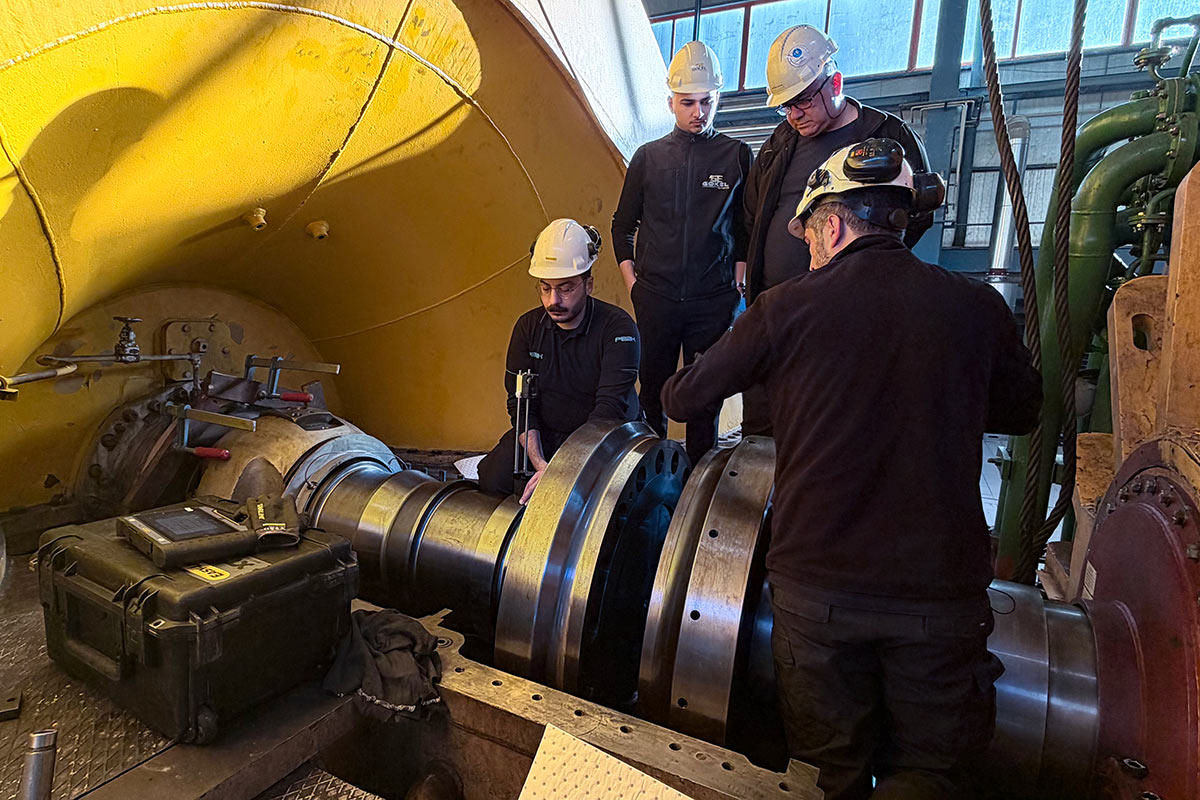
A shaft alignment system is used to align the coupling between the turbine and the generator. Precision requirements are high, so measurement systems with software that can take a large number of measurement values (multipoint) are used, such as Easy-Laser® XT770.
Flatness of the turbine’s partition surfaces
The partition surfaces between turbine halves may need to be checked for flatness to ensure correct assembly. This is done using a sweep laser transmitter such as the XT22, where measurement points are collected across the surface and evaluated to determine deviations.
Building and installing the gen-set
It is important that the foundations for turbines and other machinery are flat and level so the rest of the installation can be carried out reliably. In the long term, this is also a key requirement for stable and trouble-free operation. With Easy-Laser, this can be verified during installation.
Additional measurement applications
Other applications include centering of mountings for sluice gates in power plant dams, straightness of pipe systems, and checking squareness and flatness of pipe flanges.