

Benefits of belt drive alignment
A common misunderstanding is that sheaves/pulleys are not significantly affected by misalignments. This assumption means that the industry has unnecessarily high electricity bills. Several studies have shown that proper alignment of belt driven machines can lead to savings of up to 10% in energy costs alone!
Why correct alignment matters
Correct alignment of belt drives has a direct impact on machine performance, reliability, and operating costs. When machines are aligned correctly, the benefits are clear:
- Increased machine availability.
- Reduced risk of serious breakdowns.
- Increased service life of belts, pulleys and bearings.
- Reduced risk of overheating and secondary damage.
- Reduced noise levels and a safer working environment.
- Greater overall savings with fewer spare parts, lower energy consumption and less unscheduled downtime.
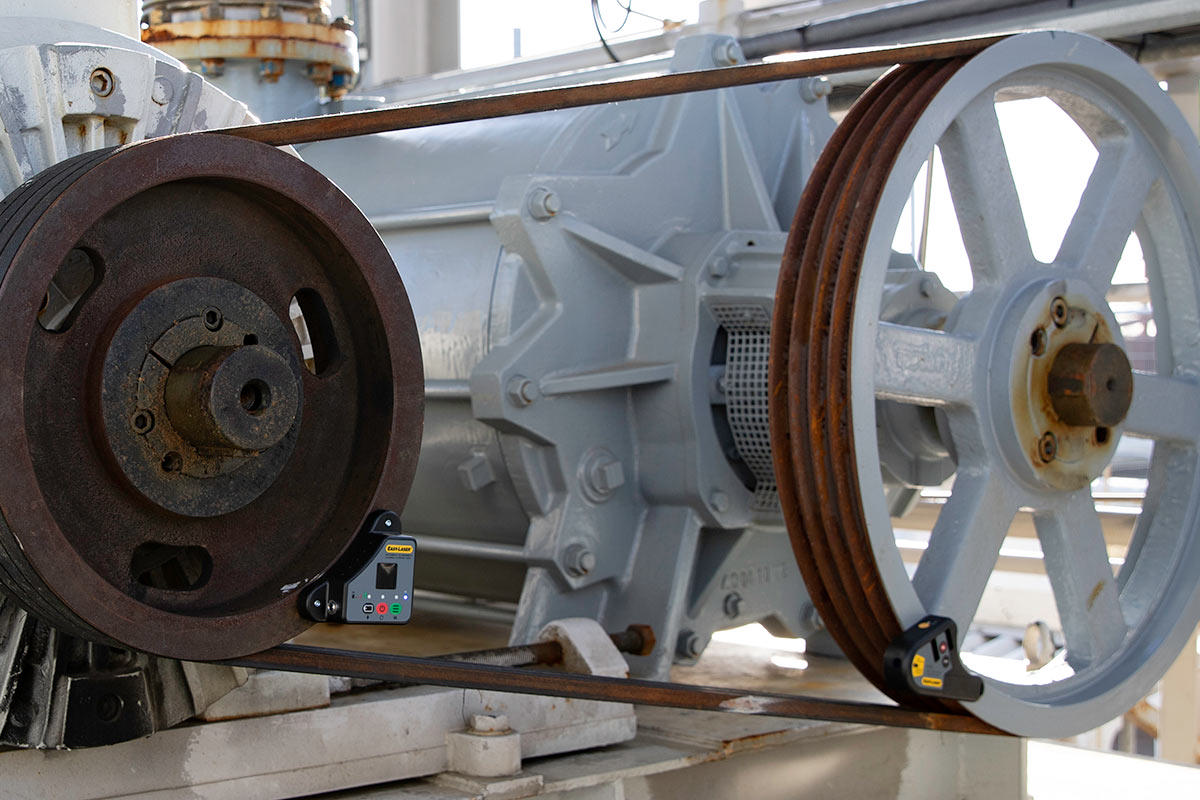
Easy-Laser XT190 belt alignment tool mounted on sheaves.
The advantages of laser compared to traditional technology
Using lasers makes work faster and easier than with traditional methods such as rulers and cords. These methods usually require two people to carry out the work, one to hold the ruler and one to adjust the machine. Spotting small differences with the naked eye using these methods is both arbitrary and dependent on who is performing the alignment.
Laser measurement systems are considerably easier to read. In addition, they are much more accurate. From the belt manufacturer’s side it is sometimes recommended that there is a maximum angular error between the pulleys of 0.5 to 0.25 degrees for optimal service life and efficiency. Such small angles cannot be seen with the naked eye without the assistance of a laser.
Offset and angular errors
There are two main types of belt drive misalignment conditions:
- Offset misalignment: the pulleys are parallel but not in the same plane. This causes the belt to track unevenly and wear faster.
- Angular misalignment: the pulleys are at an angle to each other. The belt twists during operation, increasing stress on belts and bearings.
In most cases, you will have a combination of both, leading to accelerated wear, higher energy losses, and reduced machine reliability.
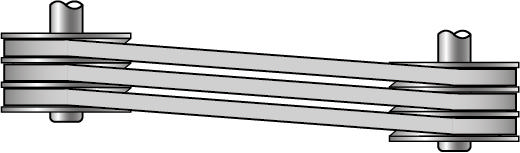
Offset misalignment
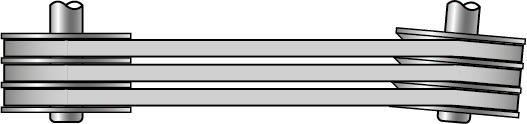
Angular misalignment
Align all types of sheaves
Using Easy-Laser belt alignment equipment, all types of sheaves can be aligned regardless of belt type. It is also easy to compensate for sheaves of varying widths. Even non-magnetic sheaves can be aligned as the units are extremely light and can be mounted against the side, secured by double-sided tape.
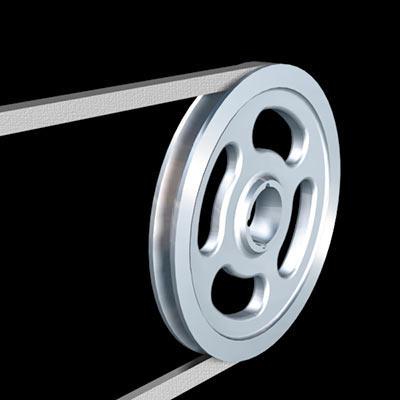
V-belt
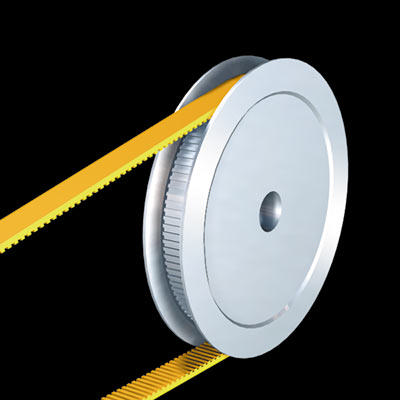
Timing belt
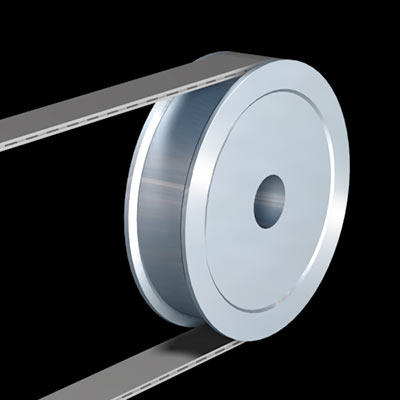
Flat belt
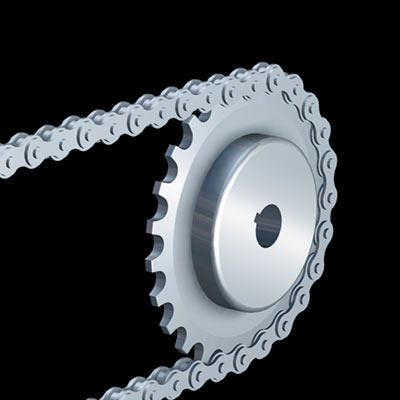
Chain drive
Wide belt transmissions especially sensitive
Transmissions with several belts in width are especially sensitive to misalignment. It is easy to understand that the difference in belt tension between the inner and outer belts can differ greatly when aligned incorrectly. This reduces efficiency as not all belts are driven optimally. If one belt is worn then all belts must be replaced with new ones at the same time, which adds expense to the entire operation. Also, wide belts are affected more as the tension is uneven over the entire width.
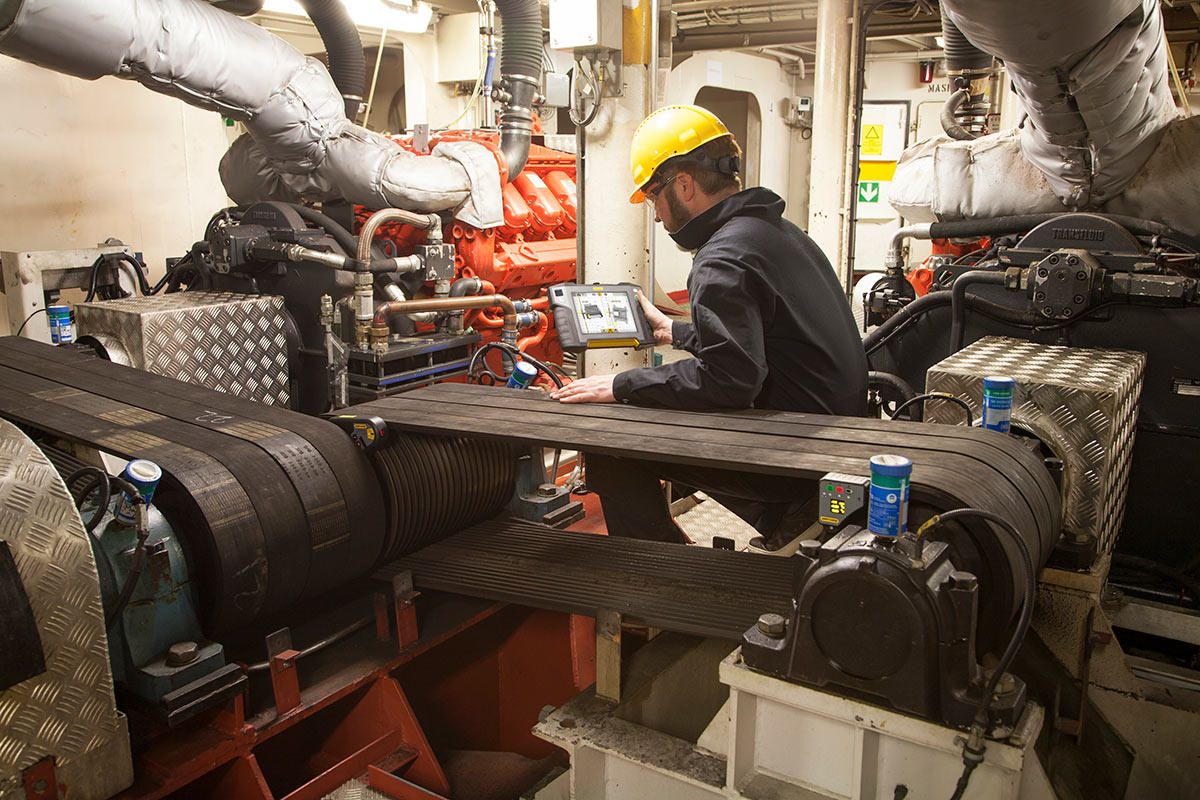
Alignment of a belt assembly on a ferry.