
Shaft alignment increases reliability of drying lines in pulp mill
Our partner in Chile, Servige, was recently called by a large pulp mill to carry out cardan shaft alignment between key rollers and gearboxes in a drying line. The challenge lay in handling long shafts, a tight schedule, and restricted workspace – all while delivering repeatable results within tolerance.
Published: December 09, 2025

Pulp mills operate one of the most demanding processes in the industry: the drying line. It runs under high load, humidity, abrasion, and continuous operation. In this environment, the reliability of cardan-driven systems is essential for mechanical stability, constant speed, energy efficiency, and operational continuity.
In a pulp mill, cardan shafts face a particularly demanding environment:
- Constant humidity and steam, which deteriorate seals and lubrication.
- Fiber abrasion, which damages joints and bearings.
- Robust but aging structures, where tolerances degrade over time.
- High operating speeds, especially in pick-up and final drives.
- Continuous production demands, increasing the impact of any deviation.
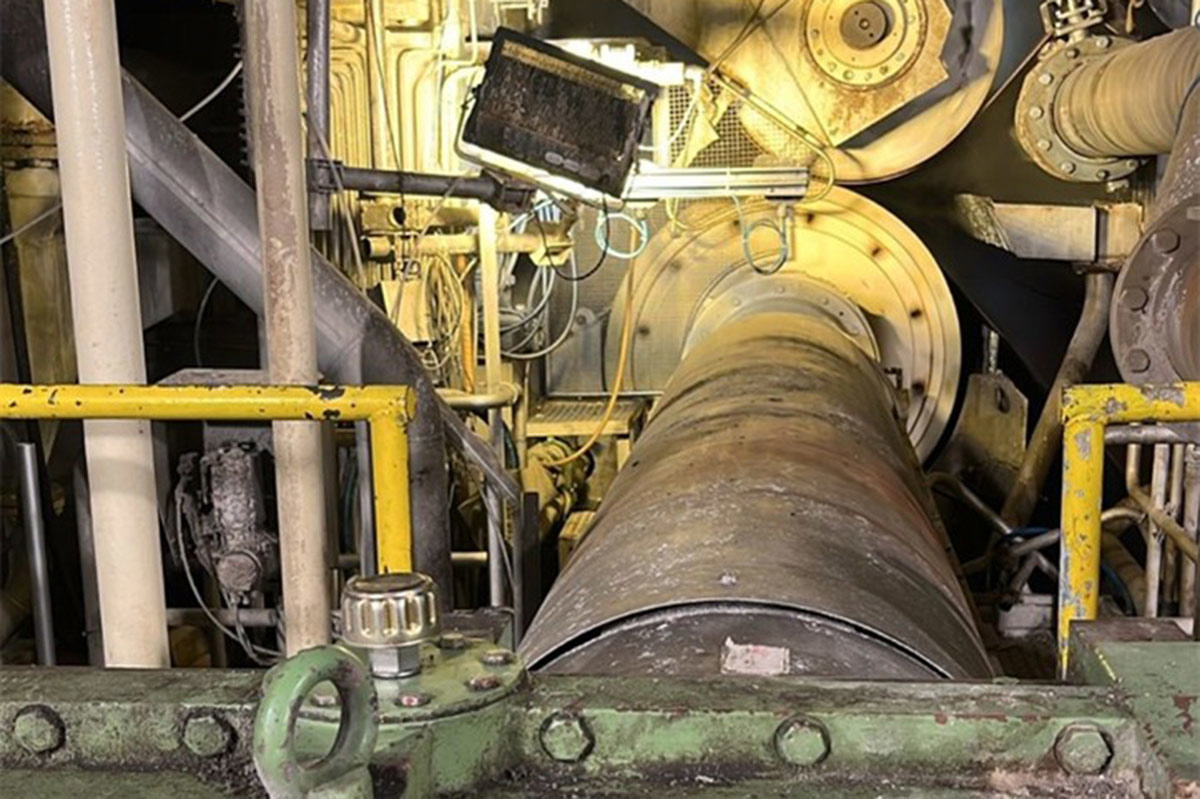
Although cardan shafts allow a certain angular margin, operating outside tolerance increases torsional vibration exponentially, affecting:
- Cardan joints
- Bearings
- Motor bases
- Roller journals
- Gearboxes
- Electrical consumption
A misaligned cardan does not just vibrate – it shortens the lifespan of the entire drivetrain.
Alignment of gearbox to roller cardan shafts
For this job, Servige carried out a cardan shaft alignment between gearbox and roller using the Easy-Laser® XT770. Because the equipment had a very low gear ratio, rotating the gearbox required considerable time and effort. Therefore, the Servige team selected the multipoint measurement method, which minimizes the need for rotation while maintaining the high accuracy required for cardan applications.
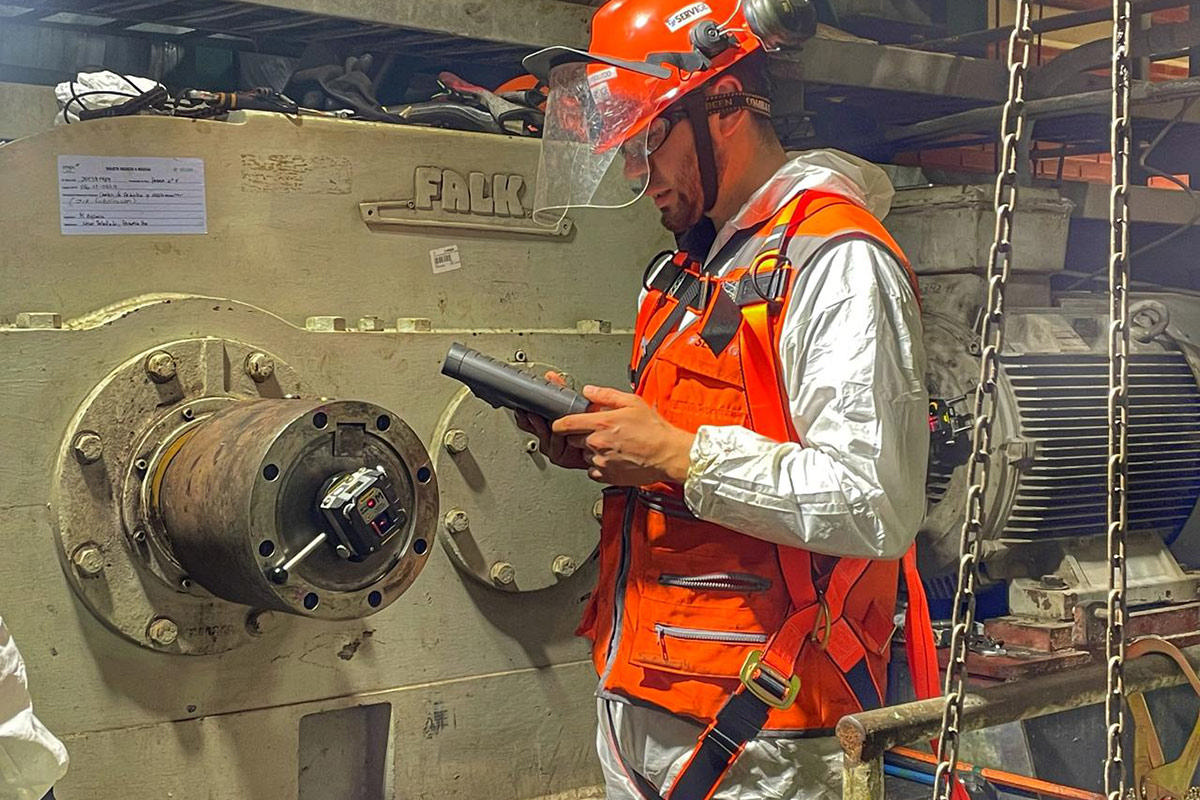
Cardan alignment on the second press – gearbox to roller.
After the alignment was completed, the final results confirmed that the assembly had been brought into proper operational condition. The vertical angular value was adjusted to –0.06 mm/100 mm, with final shim values of MF1: 0.00 mm and MF2: –0.28 mm, while the horizontal angle reached 0.01 mm/100 mm, with MF1: 0.00 mm and MF2: 0.02 mm. These values fall fully within the recommended tolerances for continuous-operation cardan shafts, ensuring stable and reliable transmission performance under load.
Throughout the process, Servige followed the complete Easy-Laser XT workflow, including vertical and horizontal angle measurement, real-time guided adjustment, post-adjustment verification, and the generation of digital reports with full traceability. This methodology allowed the team to document the final condition of each assembly in a clear and auditable format, ensuring that the cardan shafts were restored to the angular precision required for long-term reliability.
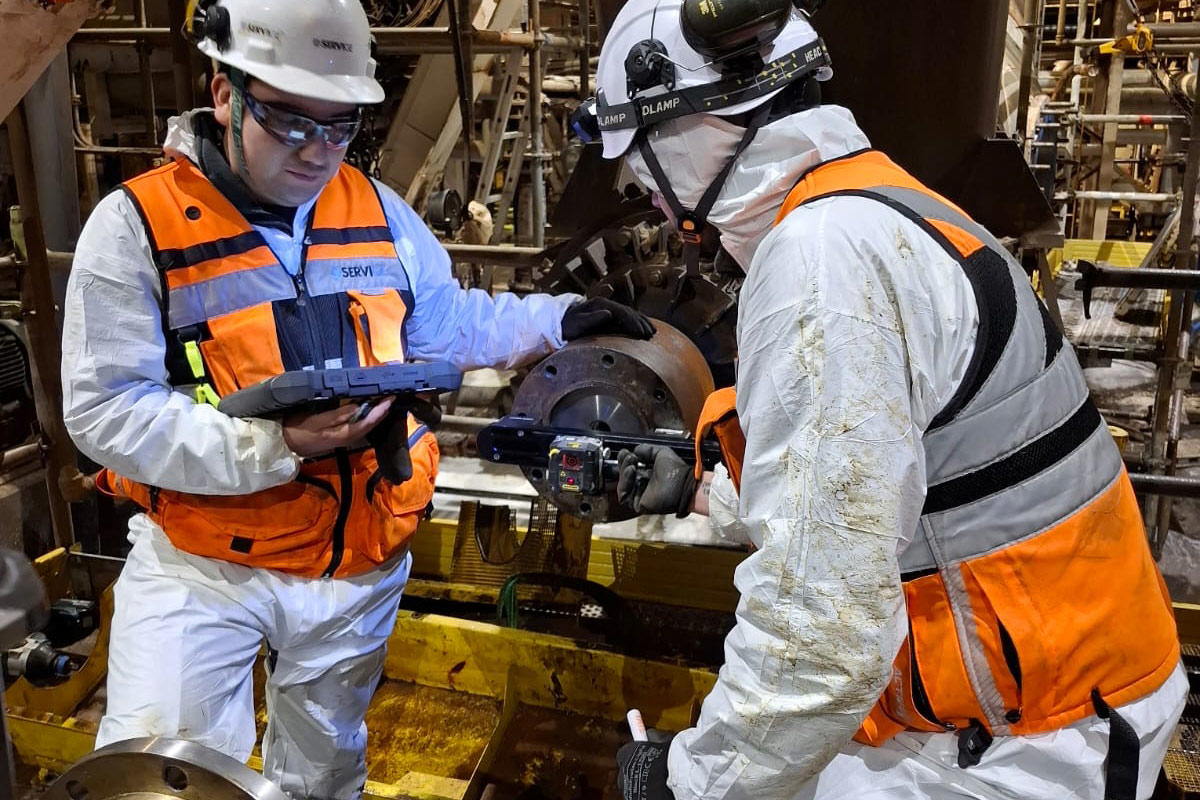
A special cardan bracket kit is used to measure shaft position.
Operational impact for the plant
After the alignment, the improvements across the transmission system were evident. Vibration levels in the assemblies decreased significantly, reflecting the corrected geometry and the restored angular relationship between the gearbox and the roller. This reduction in dynamic stress translated directly into lower wear on the cardan joints, which had previously been subjected to torsional forces generated by the misalignment. Bearings also benefited from the adjustment, as the transverse loads acting on them were reduced to levels consistent with healthy, continuous-operation conditions.
With the alignment restored, the gearboxes returned to operation within stable mechanical and thermal ranges, a clear indicator that the system was once again functioning as designed.
The digital reports produced through the Easy-Laser XT workflow provided full technical traceability, giving the plant reliable documentation for internal audits and future reference within its maintenance and condition monitoring programs.
Most importantly, the work carried out significantly lowered the probability of unplanned failures. By moving away from manual and approximate adjustment practices, the plant adopted a precise, digital, and repeatable alignment standard. This shift not only improved day-to-day operational reliability but also strengthened the long-term maintenance strategy, establishing a measurable and data-driven foundation for future interventions.
Talk to our experts about how we can help you today
Whether you have a specific application in mind or need guidance, our experts can help you choose the right approach and equipment.
Straightforward advice, aligned with your needs, your operation, and your budget.
Subscribe to our newsletter
Practical alignment knowledge, real industry applications, and product updates – delivered straight to your inbox.